

Managing properties in the Dallas-Fort Worth metroplex comes with unique challenges: and your sewer lines are no exception. Between expansive clay soils, aging infrastructure, and mature tree canopies, DFW property managers face a perfect storm of conditions that can wreak havoc on underground plumbing systems.
A single sewer line failure can cost thousands in repairs, create tenant nightmares, and trigger liability issues that ripple across your portfolio. But here's the good news: modern sewer line inspections using advanced camera technology can catch problems before they become catastrophes.
What Is a Sewer Scope Inspection?
A sewer scope inspection is a specialized camera inspection of your property's main sewer line: the critical pipeline running from the foundation cleanout to either the municipal connection or septic system. Think of it as an MRI for your underground plumbing.
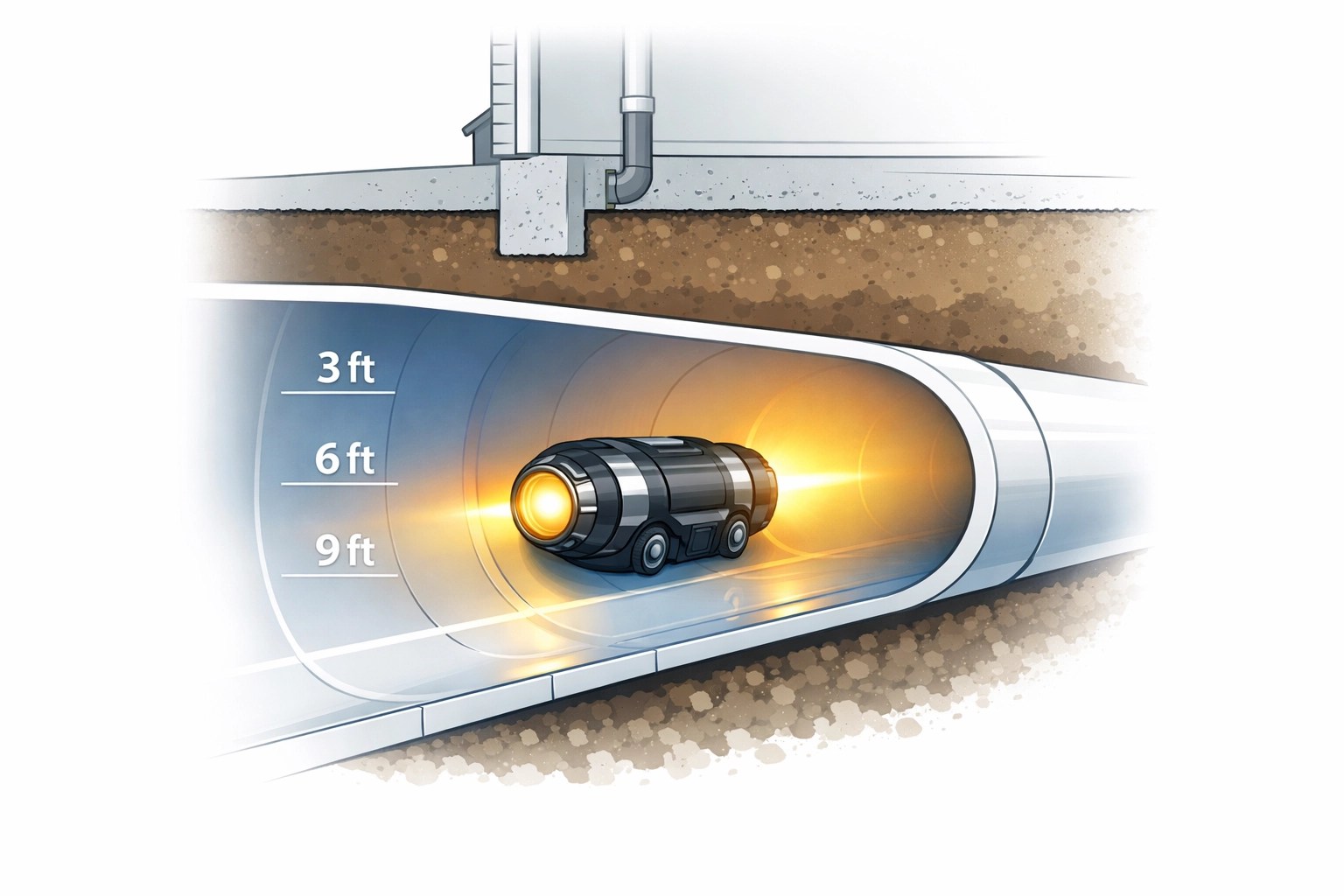
During the inspection, certified technicians insert a high-definition waterproof camera into the sewer line through an accessible cleanout. This camera travels the entire length of the pipe, transmitting real-time video that reveals exactly what's happening inside. Every foot of pipe is documented with depth and distance markers, creating a comprehensive diagnostic record.
The entire process is recorded in HD video, giving you permanent documentation of your sewer line's condition: invaluable for maintenance planning, budgeting, and due diligence during property acquisitions.
Why DFW Properties Need Specialized Attention
The Dallas-Fort Worth area presents specific environmental and structural factors that accelerate sewer line deterioration:
Expansive Clay Soils: DFW sits on some of the most volatile soil in the country. Clay-heavy earth expands dramatically when wet and contracts during our scorching summers. This constant movement creates pipe "bellies": sagging sections where waste and water pool instead of flowing freely. Over time, these bellies become magnets for blockages and eventual pipe failure.
Aging Cast-Iron Infrastructure: If you're managing properties built before 1980, there's a high probability you're dealing with cast-iron sewer laterals. These pipes are reaching or exceeding their typical 50-75 year service life. Corrosion and scaling: the buildup of rust and mineral deposits: narrow the pipe diameter and create rough surfaces that snag debris.
Mature Tree Coverage: Those beautiful old oak and pecan trees that add curb appeal? Their root systems are relentlessly seeking water sources. Sewer lines, with their nutrient-rich contents and moisture, act like beacons. Roots infiltrate through joints and microscopic cracks, eventually forming dense tangles that completely obstruct flow.
New Construction Issues: Don't assume newer properties are immune. Construction debris, improper slope installation, and offset connections plague even recently built developments. A scope inspection on new acquisitions can identify these problems while you still have contractor recourse.
Problems a Sewer Scope Reveals
Advanced camera technology exposes issues that would otherwise remain hidden until disaster strikes:
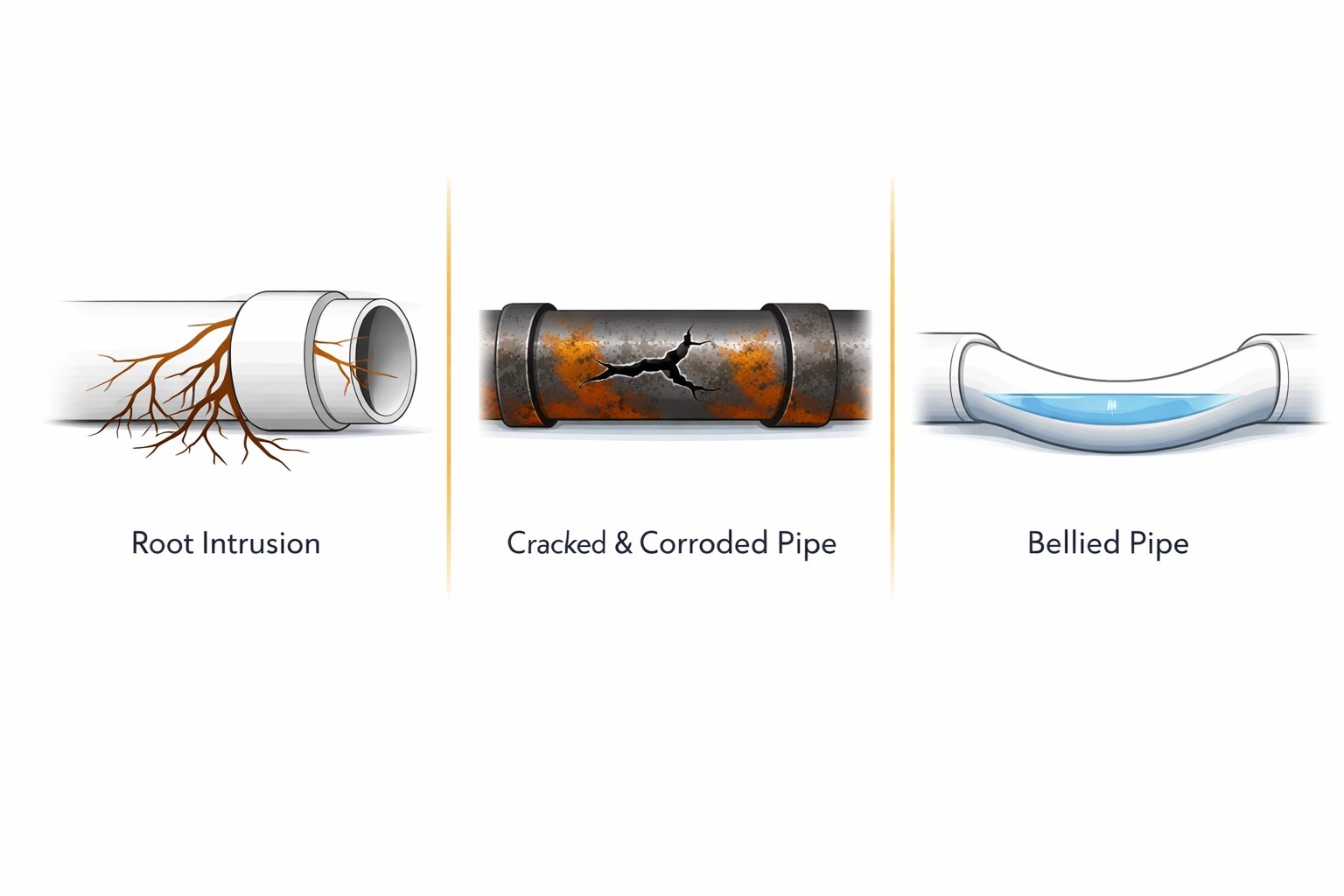
Root Intrusions: The number one enemy of DFW sewer lines. Roots enter through tiny gaps and expand into pipe-blocking masses. Left unchecked, root pressure can crack and eventually collapse entire sections.
Structural Failures: Cracks, breaks, and collapsed pipe sections show up clearly on video. You'll see exactly where the damage occurs and how extensive the repair needs to be: no guesswork, no unnecessary excavation.
Pipe Separation and Offsets: Soil movement causes joints to separate or shift. Even small offsets create snag points where waste accumulates, eventually leading to complete blockages.
Heavy Scaling and Corrosion: Particularly common in older cast-iron systems, buildup reduces effective pipe diameter by 30-50% in severe cases. The camera reveals the extent of scaling and whether cleaning or replacement is the better investment.
Bellies and Sagging: Low spots in the line appear clearly on camera. You'll see standing water, debris accumulation, and can measure the severity of the belly to determine if repair is urgent or can be scheduled.
Foreign Objects and Debris: Construction materials, collapsed pipe fragments, and items that shouldn't be there: the camera finds them all. You'll know exactly what's causing that recurring backup.
Warning Signs Every Property Manager Should Monitor
Between scheduled inspections, stay alert for these red flags indicating sewer line trouble:
- Slow draining across multiple fixtures: especially toilets and floor drains
- Gurgling sounds when water drains or toilets flush
- Sewage odors inside the property or in the yard
- Backup events in lower-level drains during heavy water use
- Unexplained wet spots or lush patches in the lawn above the sewer line
- Multiple service calls for clogs in the same property
- Pest problems around drains or grease traps
Any of these symptoms warrants immediate camera inspection. What seems like a simple clog might be masking a structural failure that will only worsen with time.
The Inspection Process: What to Expect
Professional sewer scope inspections follow a systematic protocol:
Access Point Location: Technicians identify the most suitable cleanout: typically located near the foundation, in a basement, or at an exterior access point. If existing cleanouts are inaccessible or non-existent, they may recommend installing one for future maintenance access.
Live Video Scanning: The waterproof camera advances through the entire line to the municipal connection or septic tank. As it travels, the technician notes pipe material changes, identifies defects, and marks distances. You can often watch the live feed alongside the technician.
Comprehensive Documentation: You receive same-day deliverables including full HD video footage, annotated still images highlighting problem areas, and a written report with plain-English findings and recommendations. No technical jargon: just clear explanations of what was found and what it means.
Limitation Documentation: If heavy blockages, collapsed sections, or inaccessible areas prevent complete inspection, technicians document exactly where the limitation occurred, what's preventing further access, and recommended next steps to resolve the issue.
Taking Action After Problems Are Discovered
When the camera reveals issues, you need clear guidance on next steps:
Root Cleaning: Mechanical cutting removes root masses and restores flow. For ongoing root issues, regular preventive cleaning every 18-24 months prevents re-obstruction.
Descaling: Specialized equipment removes buildup from pipe walls, restoring capacity in scaled cast-iron lines. This is often a cost-effective alternative to replacement for moderately affected pipes.
Hydro-Jetting: High-pressure water scouring is highly effective for grease accumulation, debris, and minor root intrusion. However, camera inspection should always precede hydro-jetting: you need to confirm pipe integrity can handle the pressure and identify the actual cause of blockages.
Repair or Replacement: For structural failures, you'll need targeted repair of damaged sections or, in cases of widespread deterioration, full line replacement. Camera footage provides precise location data, minimizing excavation and reducing project costs.
Following any intervention, schedule a follow-up camera inspection to verify the work was successful and document the improved condition.
Building a Preventative Maintenance Strategy
Smart property managers shift from reactive crisis management to proactive maintenance:
Risk Assessment: Evaluate each property's sewer line vulnerability. Consider age, proximity to large trees, soil conditions, and service history. Properties with higher risk factors need more frequent inspections.
Scheduled Cleaning: Establish regular maintenance intervals based on your camera inspection findings. High-risk properties might need annual attention, while newer systems can go 3-5 years between services.
Documentation System: Maintain records of all inspections, cleanings, and repairs. This history informs maintenance scheduling, helps with budgeting, and provides valuable data during property transactions.
Tenant Education: Many clogs originate from improper disposal of grease, paper products, and hygiene items. Clear lease language and periodic reminders reduce preventable issues.
Budget Planning: Use inspection findings to forecast capital expenses. Knowing you have 2-3 years before a line needs replacement allows proper financial planning instead of emergency spending.
Technology Makes the Difference
Modern sewer inspections bear little resemblance to the guesswork of years past. High-definition cameras, accurate distance tracking, and detailed video documentation transform underground mysteries into clear diagnostic data. At Flash Property Services, we combine this advanced technology with clean, professional workmanship that respects your properties and tenants.
For DFW property managers, regular sewer line inspections aren't optional: they're essential risk management. The modest investment in periodic camera inspections prevents the catastrophic costs of emergency repairs, protects your properties' value, and keeps your tenants satisfied.
Ready to take control of your sewer line maintenance? Contact Flash Property Services to schedule comprehensive camera inspections for your property portfolio. We'll provide the clarity you need to make informed decisions and keep your systems flowing smoothly.
Leave a Reply