

Managing properties in the Dallas-Fort Worth area comes with its own unique set of challenges. From tenant turnover to routine maintenance, you're juggling a lot. But there's one issue that can silently devastate your investment portfolio if you're not paying attention: slab leaks.
If you oversee commercial or residential properties built on concrete slab foundations: which is most buildings in North Texas: understanding slab leaks isn't optional. It's essential to protecting your bottom line and maintaining the long-term value of your properties.
Why North Texas Properties Face Higher Slab Leak Risks
Let's talk about what makes our region particularly vulnerable. North Texas sits on expansive clay soil, which is notorious for shifting and swelling depending on moisture levels. During our sweltering summers, the soil contracts. When rain finally arrives, it expands. This constant movement puts tremendous pressure on concrete foundations and the copper or PEX pipes running beneath them.
Unlike properties built on more stable soil types, DFW buildings experience continuous stress on their plumbing infrastructure. Over time, this movement can cause pipes to crack, joints to separate, or connections to fail: all while hidden beneath several inches of concrete.
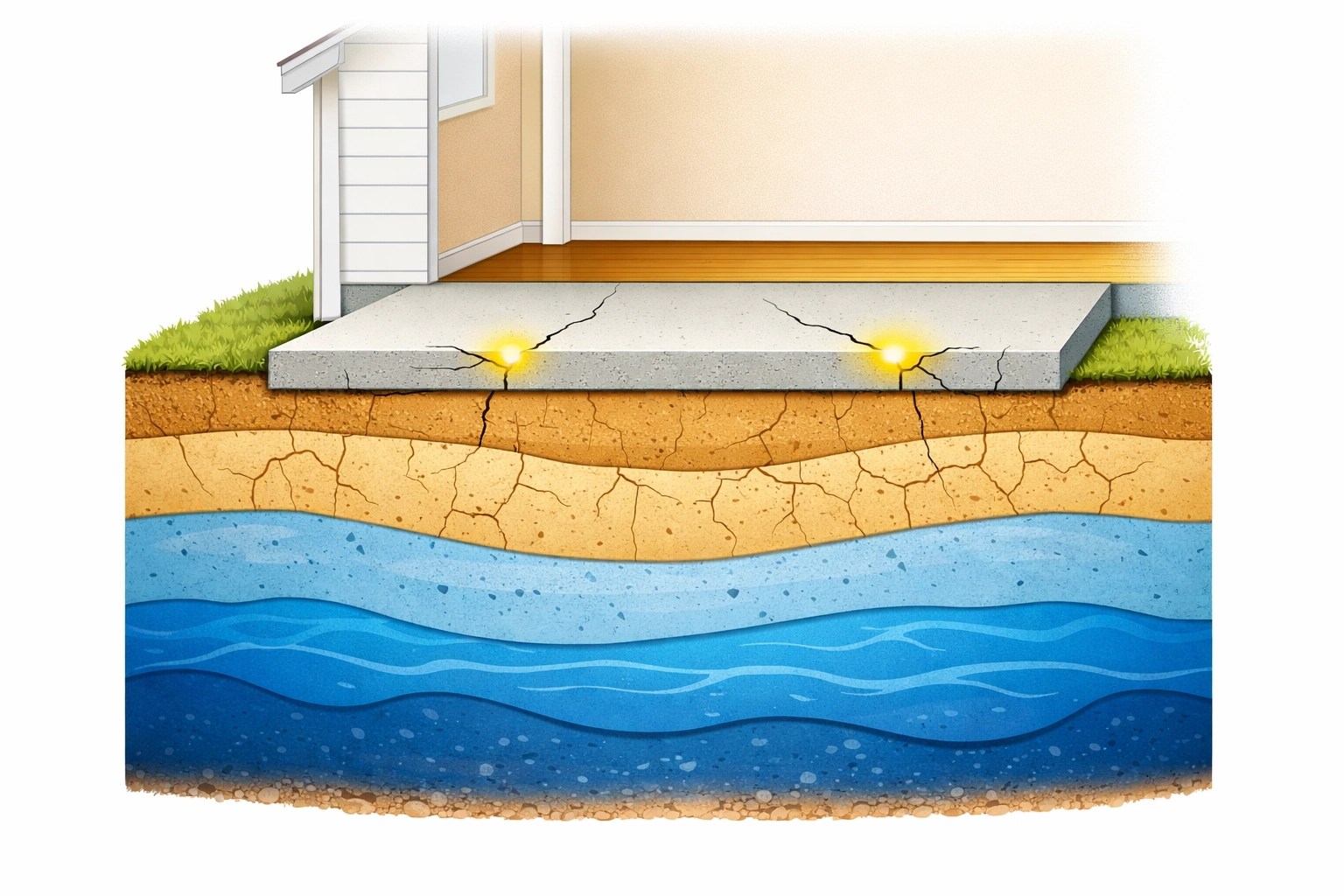
The average age of many DFW properties compounds this problem. If you're managing buildings constructed in the 1980s or earlier, you're likely dealing with original copper pipes that have been stressed by decades of soil movement. Those pipes don't last forever, and the clock is ticking.
The Real Cost of Ignoring Slab Leaks
Here's where property managers need to pay close attention: slab leaks aren't just plumbing problems. They're financial liabilities that grow exponentially the longer they're ignored.
Foundation Damage: Water escaping beneath your slab doesn't just disappear. It erodes the soil supporting your foundation, creating voids and causing uneven settling. What starts as a small leak can lead to cracked walls, doors that won't close properly, and visible foundation shifts. Repair costs? We're talking tens of thousands of dollars once foundation work becomes necessary.
Property Value Erosion: Try selling or refinancing a property with documented foundation issues. Your property's market value takes an immediate hit, and potential buyers will either walk away or demand significant price reductions. The same goes for attracting quality tenants: nobody wants to rent a unit with visible water damage or structural concerns.
Insurance Complications: This is the part that catches many property managers off guard. Most commercial property insurance policies require you to address known maintenance issues promptly. If you're aware of a slab leak and delay repairs, your insurer can: and often will: deny claims for subsequent damage. That means you're personally liable for costs that could have been covered.
Tenant Relations and Liability: Slab leaks create the perfect environment for mold growth, foul odors, and water damage to flooring and walls. These conditions don't just trigger tenant complaints; they can lead to health-related legal disputes, lease terminations, and damaged reputation in competitive rental markets.
Warning Signs Every Property Manager Should Monitor
The challenge with slab leaks is that they're hidden. You can't visually inspect pipes running beneath concrete. But you can watch for these red flags:
Unexplained Water Bill Increases: If your water usage has spiked without explanation: no new tenants, no irrigation changes: you likely have a leak somewhere. Slab leaks often cause consistent, gradual increases that compound over time.
Hot Spots on Floors: Run your hand across flooring, especially in kitchens, bathrooms, and laundry areas. Warm or hot spots indicate a hot water line is leaking beneath the slab.
Foundation Cracks and Movement: New cracks appearing in walls or floors, doors that suddenly stick, or gaps appearing around window frames all suggest foundation movement potentially caused by soil erosion from a slab leak.

Mold and Moisture Problems: Persistent mildew smells, visible mold growth, or moisture on walls and floors: particularly in areas without obvious water sources: point to hidden leaks.
Low Water Pressure: If multiple units or areas of your building experience reduced water pressure simultaneously, you may have a significant leak reducing flow throughout the system.
Sound of Running Water: When all fixtures are off but you or tenants hear water running beneath floors, that's a slab leak making itself known.
Professional Detection: Your First Step
When you suspect a slab leak, resist the urge to start breaking up concrete. Modern detection technology has made the process far less invasive than it used to be.
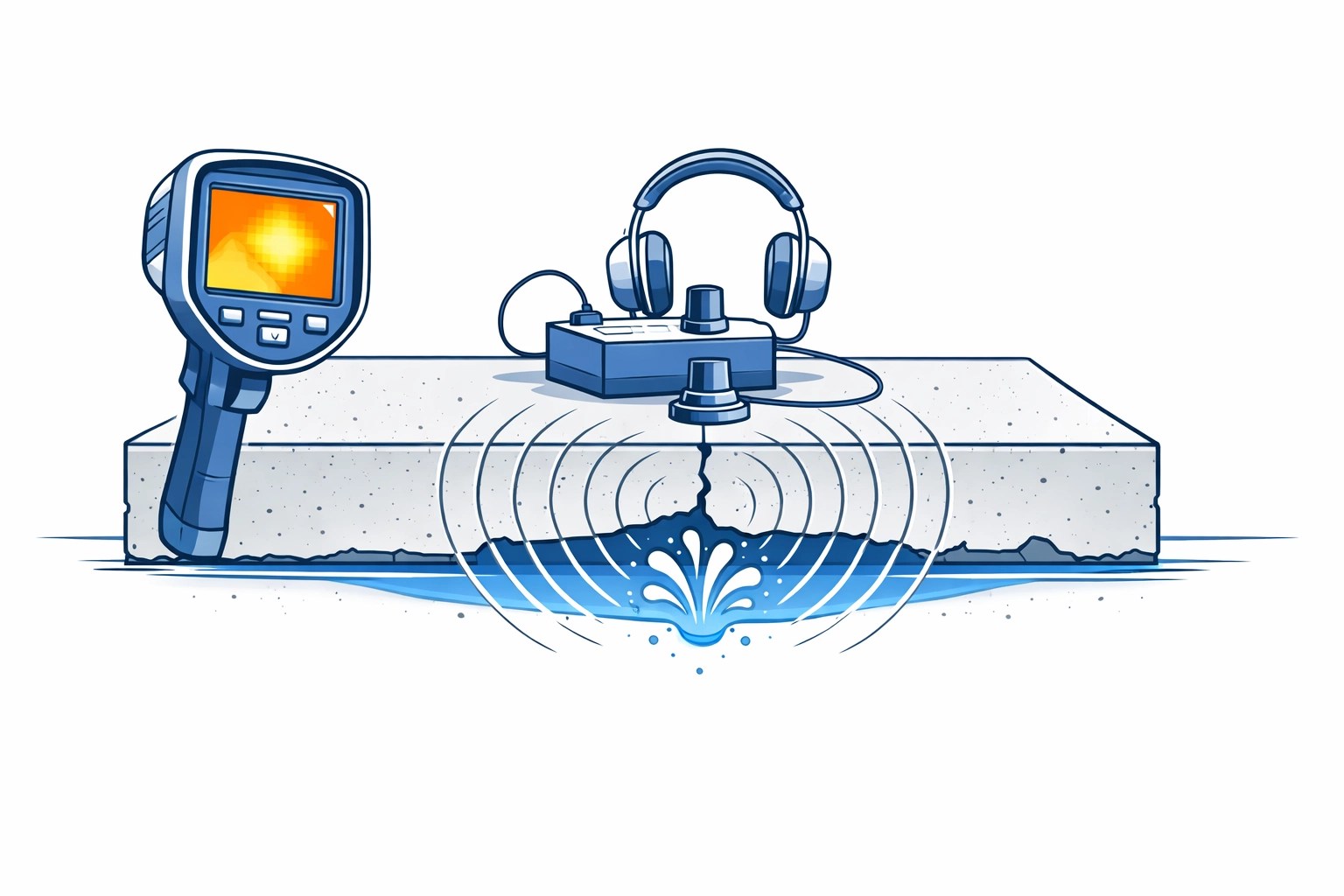
Professional slab leak detection services use several non-destructive methods:
Electronic Leak Detection: Specialized equipment detects the sound frequency of water escaping pressurized pipes, even through concrete and soil.
Thermal Imaging: Infrared cameras identify temperature variations caused by hot or cold water leaking beneath slabs.
Pressure Testing: Technicians isolate sections of your plumbing system and monitor pressure drops that indicate leaks.
Video Pipe Inspection: Fiber optic cameras can travel through existing plumbing lines to visually identify damage points.
These technologies allow licensed professionals to pinpoint leak locations within inches, minimizing demolition and repair costs. The detection service itself is a small investment compared to the costs of exploratory demolition or, worse, undetected damage.
Understanding Your Repair Options
Once a leak is confirmed and located, you have several repair approaches depending on the severity and location:
Spot Repair: For isolated leaks in accessible locations, technicians can break through the concrete at the specific leak point, repair or replace the damaged pipe section, and restore the slab. This is often the most cost-effective solution for single leaks.
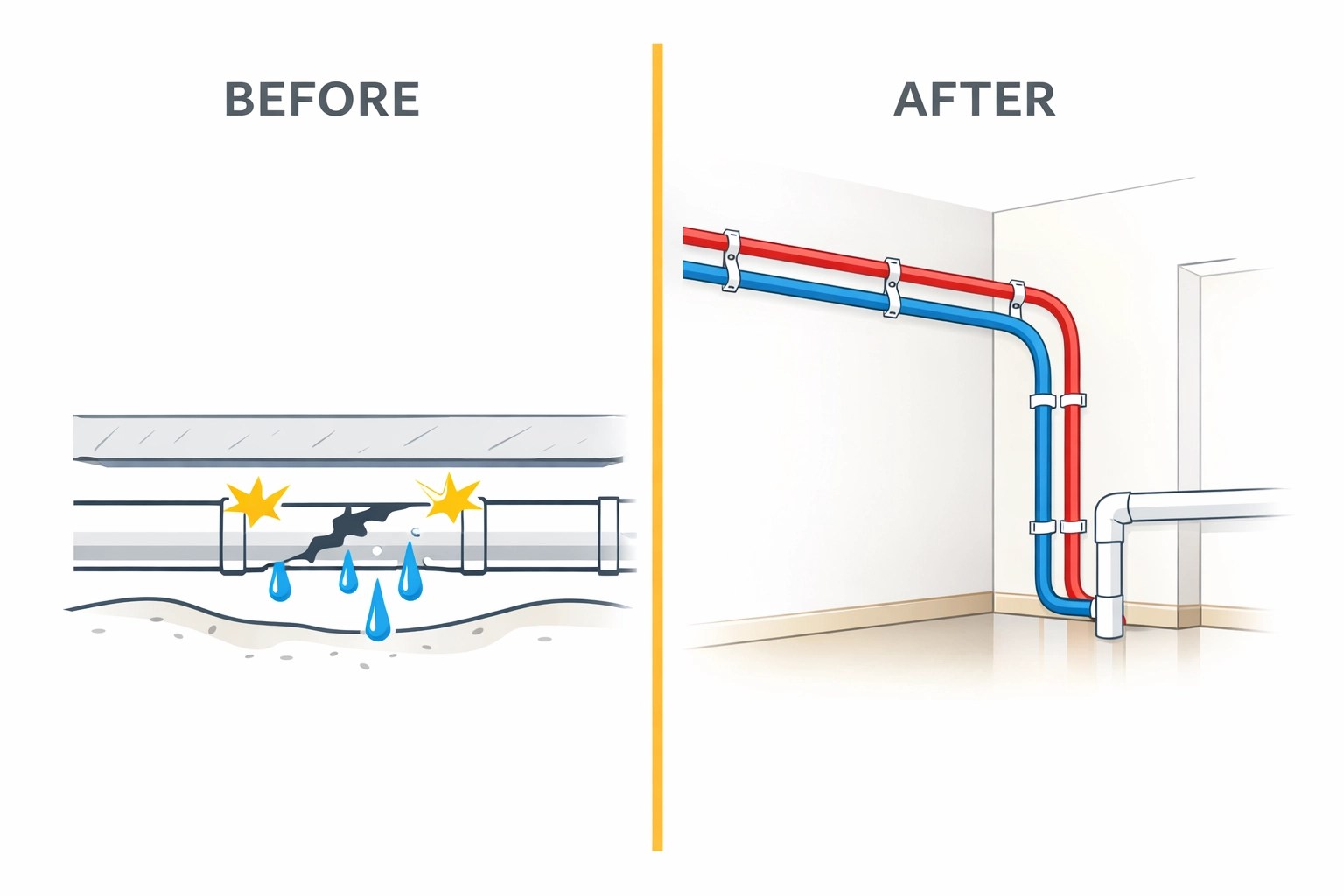
Rerouting: When pipes are severely corroded or multiple leaks are likely, rerouting the affected line through walls or ceilings: bypassing the slab entirely: can be more economical than extensive concrete work.
Epoxy Pipe Coating: For properties with aging copper lines showing early deterioration, epoxy coating can seal small leaks and prevent future corrosion without demolition. This works best as a preventive measure before major failures occur.
Complete Repiping: If your property has original plumbing from decades ago, you may be better served by complete repiping with modern PEX or CPVC materials. While the upfront cost is higher, you eliminate the risk of future slab leaks and can often reroute entirely above-slab.
Documentation: Protect Yourself and Your Claims
As a property manager, documentation isn't just good practice: it's your insurance policy against denied claims and legal disputes.
Maintain detailed records of:
- All detection services performed, including dates and findings
- Professional certifications and licenses of contractors
- Repair work completed, with before and after photos
- Invoices and payment records
- Communication with tenants regarding the issue and resolution
This documentation demonstrates due diligence to insurance companies and protects you if tenant disputes arise. It also creates a maintenance history that adds value during property sales or refinancing.
Prevention: Reducing Future Risk
While you can't eliminate slab leak risk entirely in North Texas, you can reduce it:
Regular Plumbing Inspections: Schedule annual plumbing inspections for properties over 20 years old. Early detection of corrosion or weak points allows for proactive repairs.
Monitor Water Bills: Implement systems to flag unusual usage patterns automatically. Catching leaks early saves thousands in damage costs.
Foundation Maintenance: Proper drainage around your property reduces soil moisture fluctuations that stress foundations and pipes. Keep gutters clear, maintain proper grading, and address drainage issues promptly.
Water Pressure Regulation: Excessive water pressure accelerates pipe wear. Install or verify pressure regulators are functioning properly.
Choose the Right Professional Partners
Slab leak detection and repair requires specialized expertise. When selecting a service provider, verify:
- State plumbing licenses and master plumber certifications
- Experience specifically with slab leak detection (not just general plumbing)
- Modern detection equipment and methods
- Comprehensive service offerings from detection through restoration
- Positive reviews from other property management professionals
The right partner doesn't just fix the immediate problem: they help you develop a long-term strategy for maintaining your properties' plumbing infrastructure.
Take Action Before Small Problems Become Major Expenses
Slab leaks don't get better with time. Every day you wait, more water escapes, more soil erodes, and more damage accumulates. For property managers, the math is simple: early detection and prompt repair cost a fraction of delayed action.
If you're managing properties in the DFW area and haven't had recent plumbing inspections, now's the time. If you're seeing any warning signs, don't wait for the problem to escalate.
Your properties are significant investments. Protecting them from slab leak damage isn't just smart maintenance: it's sound financial management. At Flash Property Services, we understand the unique challenges North Texas property managers face. Our team specializes in protecting your investment through professional detection, efficient repairs, and preventive maintenance strategies.
Need a second opinion on a potential slab leak or want to schedule preventive inspections? Reach out to our team and let's talk about keeping your properties protected and profitable.
Leave a Reply