
If you're a property investor in the Dallas-Fort Worth area, you already know that unexpected repairs can eat into your profits faster than almost anything else. Water heaters? They're silent budget killers when they fail: but they're also one of the easiest systems to maintain when you know what you're doing.
Here's the bottom line: strategic preventive maintenance can double your water heater's lifespan and eliminate those costly emergency replacements. We're talking about one of the highest-ROI investments you can make in property management. Let's break down exactly how to protect your investment and keep your tenants happy.
Why Water Heater Maintenance Should Be Your Priority
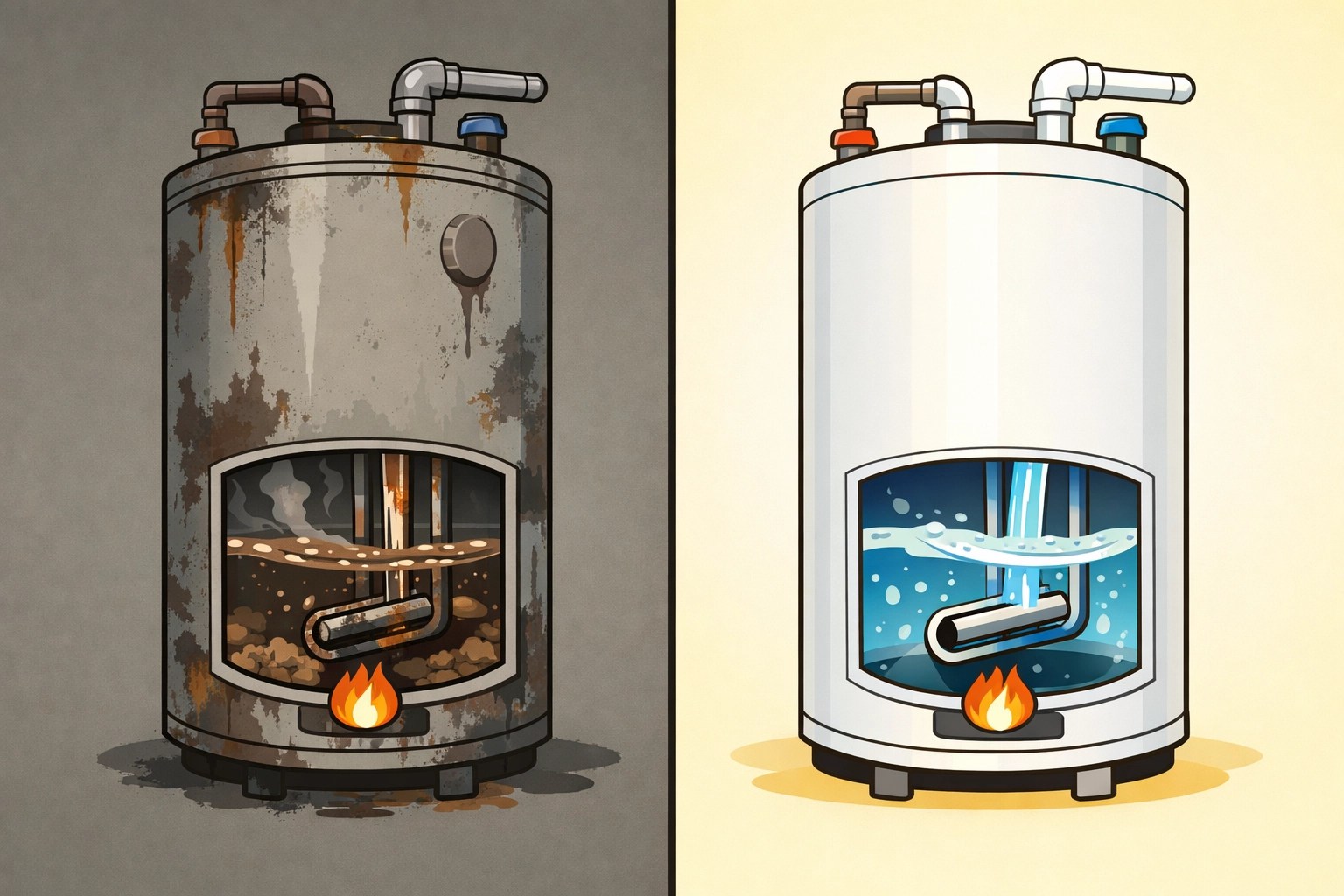
Skipped maintenance is the most preventable cause of water heater failure. Think about it: a single annual professional inspection costs a fraction of what you'd pay for an emergency repair at 9 PM on a Friday night, let alone a full replacement that could run you $1,500 to $3,000.
But it's not just about avoiding catastrophic failure. Regular maintenance protects your tenant relationships. When tenants have consistent hot water and no rusty discharge coming from their taps, they're more likely to renew their lease. Turnover costs are real, and anything you can do to reduce them goes straight to your bottom line.
The Core Maintenance Protocol Every Investor Needs
Annual Tank Flushing: Your First Line of Defense
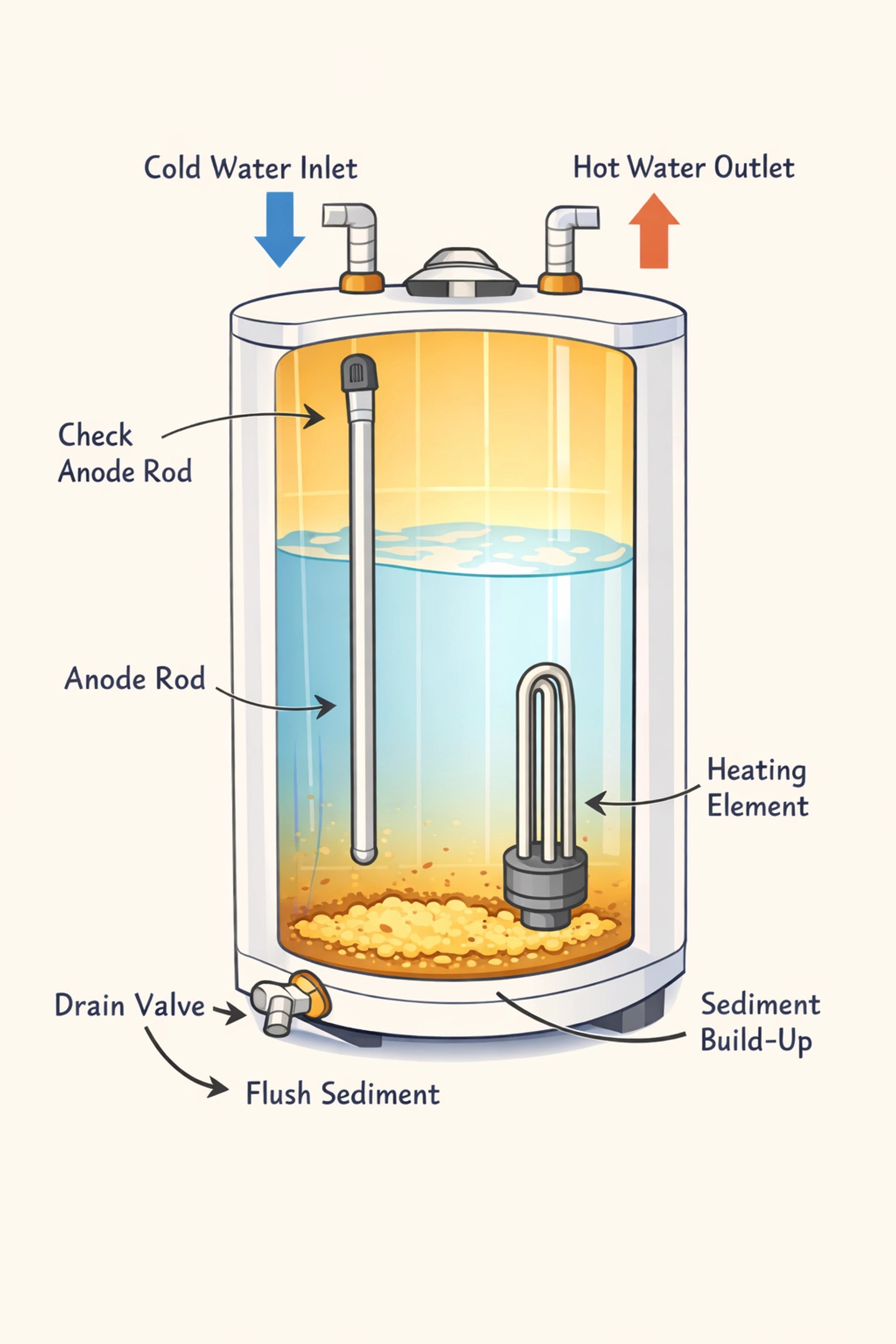
Flushing your water heater tank once a year removes sediment, minerals, and bacteria buildup that naturally accumulates over time. In the DFW area, where we have notoriously hard water, you'll want to do this every 8-9 months instead of annually.
This single task extends your system's lifespan significantly and prevents that rusty, discolored water that triggers tenant complaints and potential lease violations. The process is straightforward:
- Connect a garden hose to the drain valve
- Let water flow until it runs clear (typically 15-30 minutes)
- Check for any debris or sediment in the discharge
For investors managing multiple properties, scheduling these flushes systematically across your portfolio ensures you're never caught off guard.
Anode Rod Replacement: The Unsung Hero
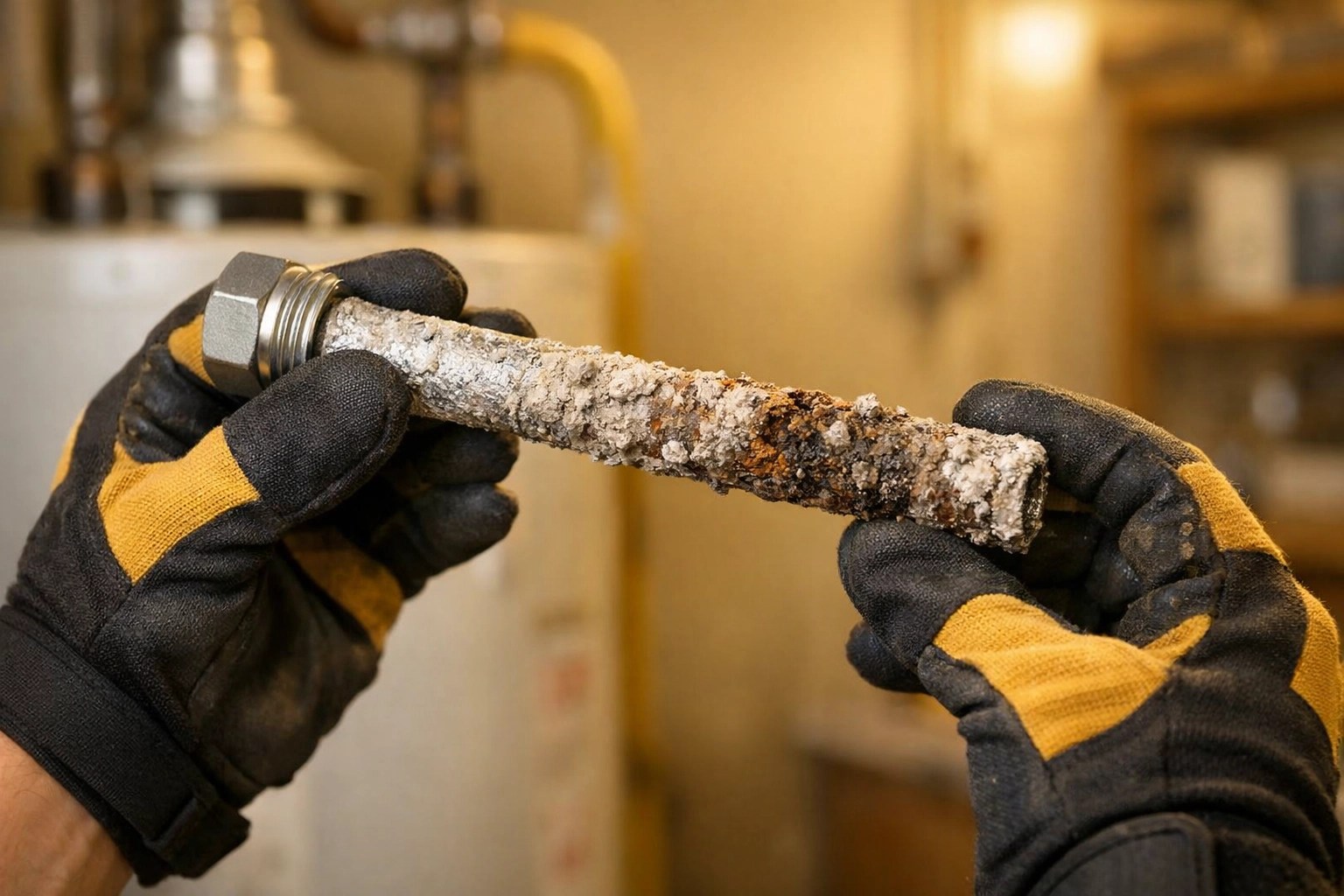
Most property owners have never heard of anode rods, but they're critical to your water heater's longevity. This component prevents corrosion inside the tank by attracting corrosive elements away from the tank walls.
Request anode rod inspection during every annual maintenance visit. If the rod is heavily corroded or worn down to less than half an inch thick, replace it immediately. This relatively inexpensive replacement can add years to your water heater's life.
Temperature Settings: The Sweet Spot for Safety and Savings
Set your water heater thermostat to 120°F. This isn't arbitrary: it's the optimal temperature that:
- Reduces scalding liability (critical for investor risk management)
- Minimizes energy costs
- Prevents overheating-related damage to the system
If you have digital thermostats, verify they're calibrated correctly. Inaccurate readings can lead to efficiency losses that add up across multiple properties.
Visual Inspections: Catching Problems Early
Train yourself or your property manager to look for:
- Rust or corrosion on the tank or connections
- Water pooling around the base
- Loose fittings or connections
- Unusual noises (banging, hissing, or popping sounds)
These inspections catch problems before they become tenant complaints or emergency situations. A small leak detected early might cost $150 to repair; the same leak ignored for months could mean a $3,000 replacement plus water damage remediation.
DFW-Specific Challenges: Hard Water Isn't Your Friend
Dallas-Fort Worth's hard water poses unique challenges that out-of-state investors often underestimate. The high mineral content in our water supply accelerates tank degradation and reduces heating efficiency faster than in other markets.
This means:
- More frequent flushing schedules
- Enhanced descaling protocols for tankless units
- Potential need for water softening systems in high-value properties
Professional maintenance services familiar with DFW water conditions understand these nuances and can adjust maintenance schedules accordingly.
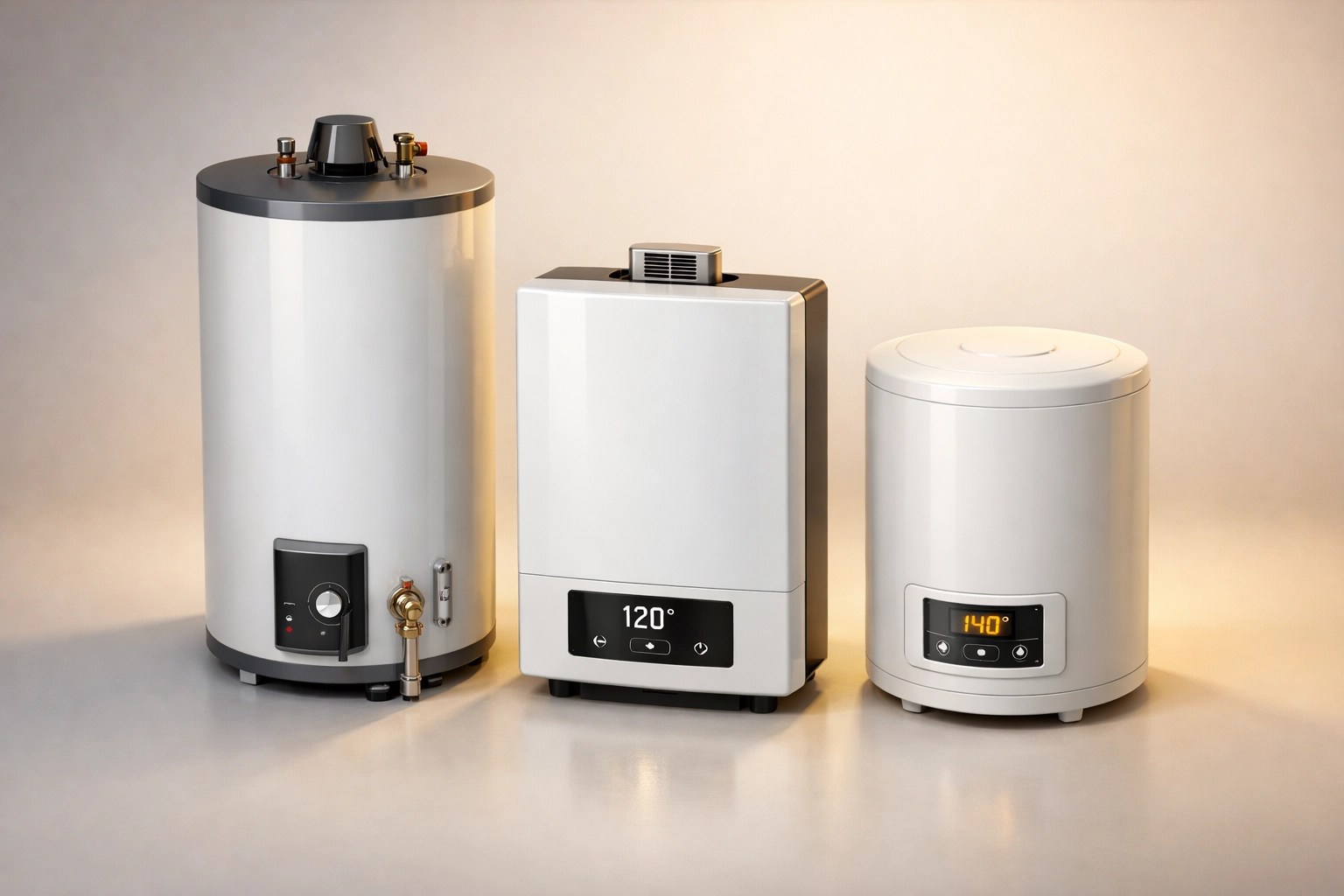
Different Water Heater Types, Different Needs
Tankless Water Heaters
If your rental properties have tankless systems, annual professional inspection should include:
- Venting system and air intake checks for blockages
- Condensate trap inspection
- Burner assembly inspection
- Water filter screen cleaning
- Flushing or descaling based on water quality
Tankless units are popular in newer DFW properties, and while they're generally reliable, they require specialized maintenance knowledge.
Gas Water Heaters
These require certified technicians for safety compliance. Professional maintenance includes:
- Flue system integrity checks
- Burner performance optimization
- Thermostat calibration
- Gas line safety verification
Never attempt DIY repairs on gas units: the liability exposure isn't worth it.
Electric Water Heaters
Service typically covers:
- Pressure relief valve checks
- Heating element inspection and testing
- Comprehensive leak detection
- Anode rod replacement
Electric units are generally the most straightforward to maintain, but they still require professional attention.
Additional Strategies to Reduce Costs and Extend Lifespan
Insulation Investment
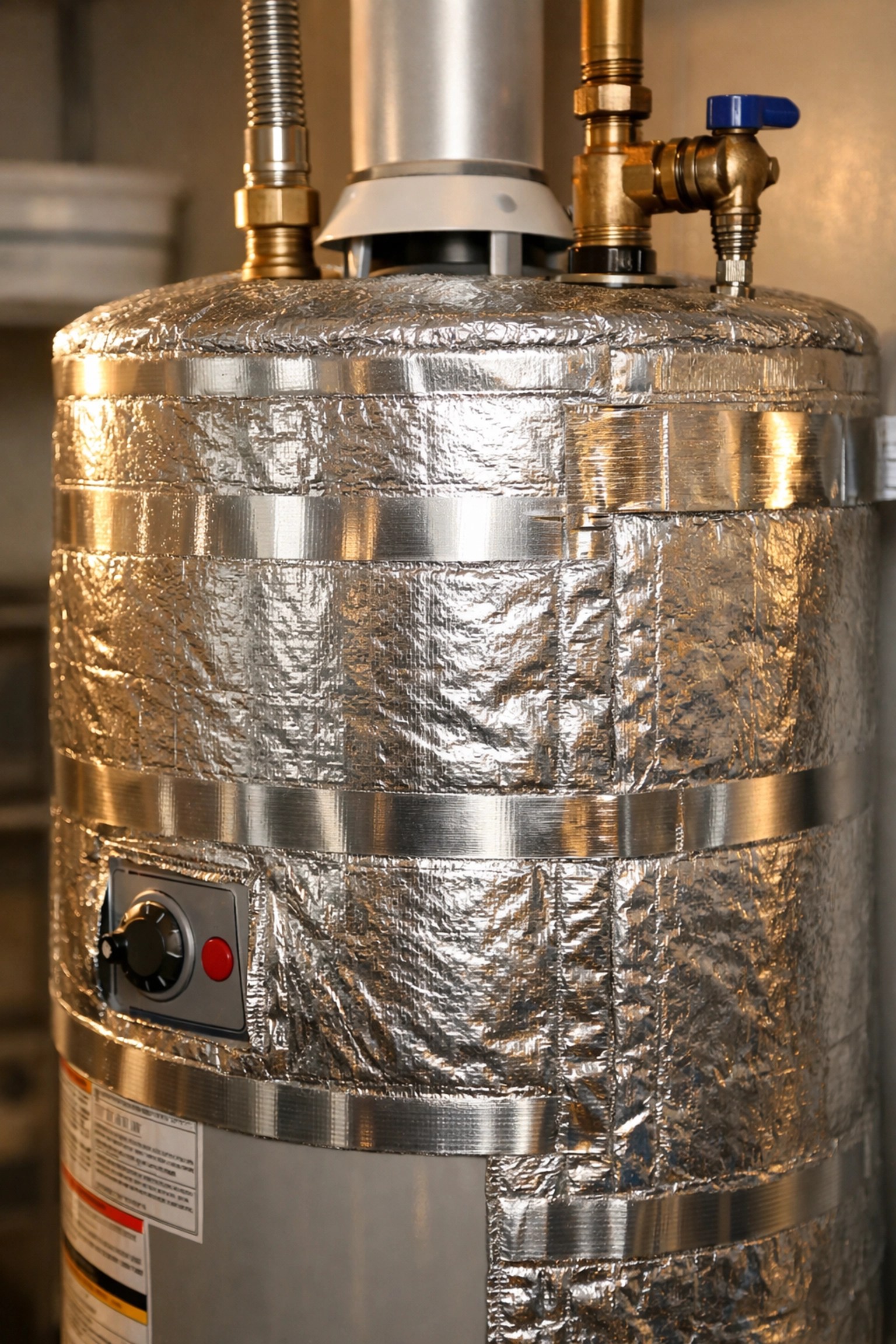
Adding a water heater insulation blanket can reduce heat loss and lower utility bills. For properties where tenants pay utilities, this is a selling point. For properties where you cover utilities, it's a direct cost savings. Use aluminum foil tape to secure the blanket properly and avoid covering vents or controls.
Professional Maintenance Plans
Annual maintenance contracts typically cost less than a single emergency service call. They also provide peace of mind for tenant retention: knowing that hot water issues will be addressed promptly reduces complaints and improves your reputation as a landlord.
Pressure Regulation
Fluctuating water pressure is common in DFW and can damage water heaters over time. Professional pressure adjustment protects your investment and prevents premature wear on all plumbing fixtures throughout the property.
The ROI Math That Actually Matters
Let's put this in perspective with real numbers:
- Average water heater lifespan with no maintenance: 6-8 years
- Average lifespan with proper maintenance: 12-15 years
- Cost of annual professional maintenance: $150-$250
- Cost of premature replacement: $1,500-$3,000
- Cost of emergency repair with tenant displacement: $2,000-$5,000+
Over a 10-year period, spending $2,000 on preventive maintenance could save you $3,000-$5,000 in replacement costs, not to mention the avoided tenant turnover expenses and property damage.
Implementation Timeline for Your Portfolio
Create a systematic approach:
- Inventory your properties – Note water heater types, ages, and last service dates
- Schedule annual inspections – Stagger them throughout the year to manage cash flow
- Document everything – Keep maintenance records for each property
- Budget accordingly – Build maintenance costs into your operating expenses
- Communicate with tenants – Let them know when service is scheduled
Consistency is key. Gaps in coverage lead to gaps in performance and unexpected failures.
Partner with Professionals Who Understand Investor Needs
Property investors have different needs than homeowners. You need service providers who understand urgency, work within budgets, and communicate clearly about what's necessary versus what's optional.
At Flash Property Services, we specialize in maintenance programs designed specifically for DFW rental property portfolios. We understand that your time is valuable and your margins matter.
Whether you're managing two properties or twenty, a proactive water heater maintenance strategy protects your investment, reduces tenant turnover, and eliminates surprise capital expenditures. In the competitive DFW rental market, these advantages can make the difference between average returns and exceptional performance.
Want to discuss a maintenance plan tailored to your portfolio? Get in touch with our team and let's talk about protecting your investments.
Leave a Reply