
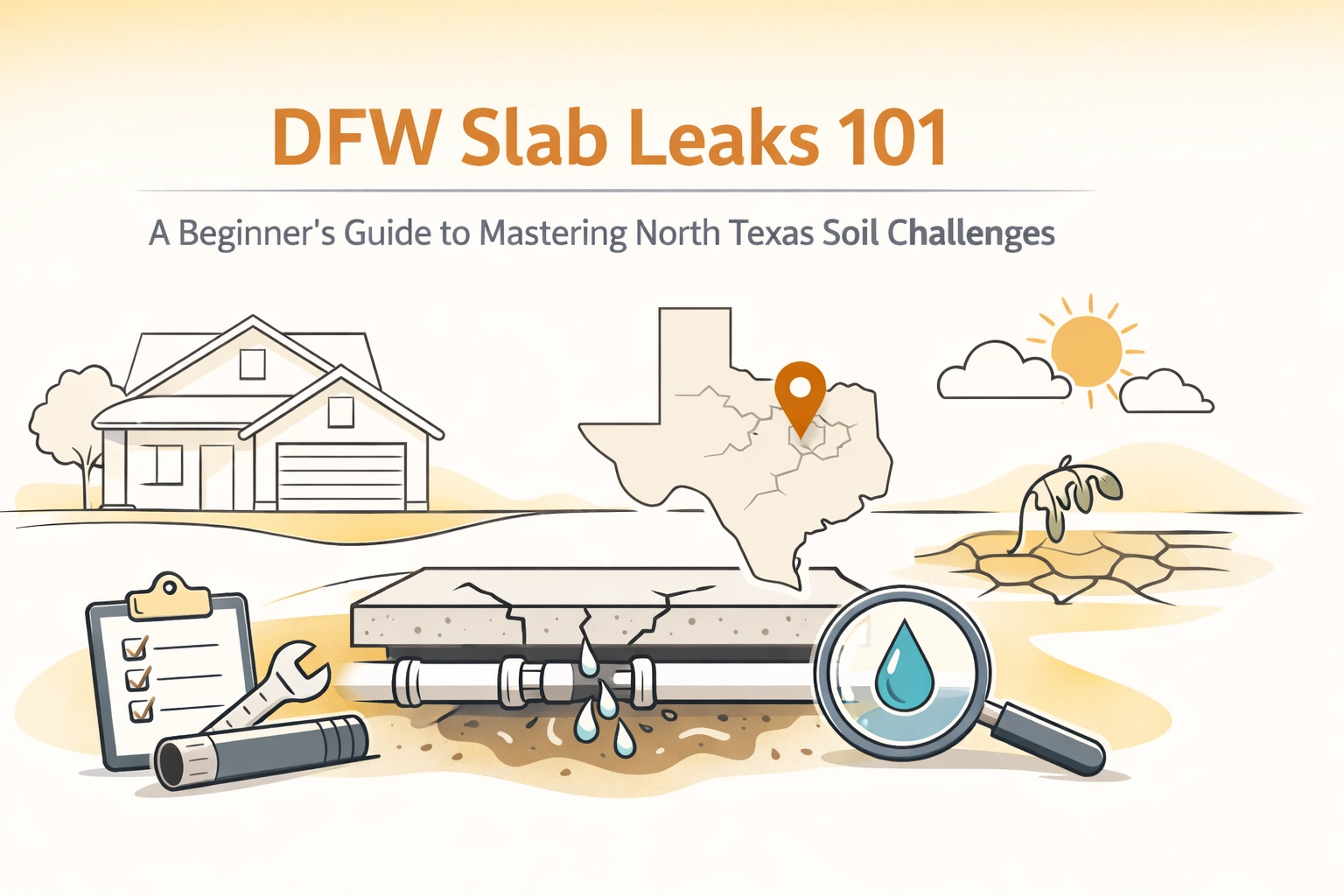
If you own property in the Dallas-Fort Worth area, there's a hidden threat lurking beneath your concrete foundation that you need to know about. Slab leaks are one of the most common: and potentially expensive: plumbing issues facing North Texas homeowners, and the unique soil conditions in our region make them particularly prevalent.
Let's cut through the confusion and get you up to speed on what slab leaks are, why they happen here, and most importantly, how to protect your property value from this costly problem.
What Exactly Are Slab Leaks?
A slab leak occurs when water lines break or crack beneath your home's concrete foundation. These aren't your typical visible plumbing problems: they're happening out of sight, often going undetected for weeks or even months while they silently damage your foundation and drive up your water bill.
The scary part? In the DFW area, these aren't rare occurrences. They're practically a regional specialty, thanks to a perfect storm of factors that we'll break down for you.
The Clay Soil Problem: DFW's Biggest Culprit
Here's what makes North Texas different from most other places: our expansive clay soil. This type of soil is highly reactive to moisture changes, and it creates a constant cycle of stress on everything built on top of it.

When we get those heavy spring rains, the clay soil absorbs water like a sponge and expands. During our notorious hot, dry summers, that same soil shrinks as moisture evaporates. This expansion and contraction doesn't just happen once: it's a relentless cycle that repeats year after year, putting continuous pressure on your foundation and the pipes running beneath it.
Think of it like bending a paperclip back and forth. A few times? No problem. But do it repeatedly over years, and eventually, it's going to snap. That's essentially what's happening to the pipes under your slab, except the consequences are a lot more expensive than a broken paperclip.
This cumulative stress on pipes and fittings makes slab leaks not a question of "if" but "when" for many DFW properties, especially older homes that have been through decades of this soil movement.
Beyond the Soil: Other Risk Factors in Our Region
The clay soil is the main villain, but it's not acting alone. Several other factors specific to North Texas compound the slab leak problem:
Temperature Extremes: Our summers regularly hit triple digits, and while our winters are generally mild, those occasional freezes can wreak havoc. Pipes beneath concrete slabs lack the soil insulation that protects deeper lines, making them vulnerable to expansion and cracking during sudden cold snaps.
Aging Infrastructure: If your home was built before the 1990s, pay attention. Many older properties used materials like galvanized steel or copper pipes that corrode over time. When you combine aging materials with shifting soil and pressure changes, you've got a recipe for failure.
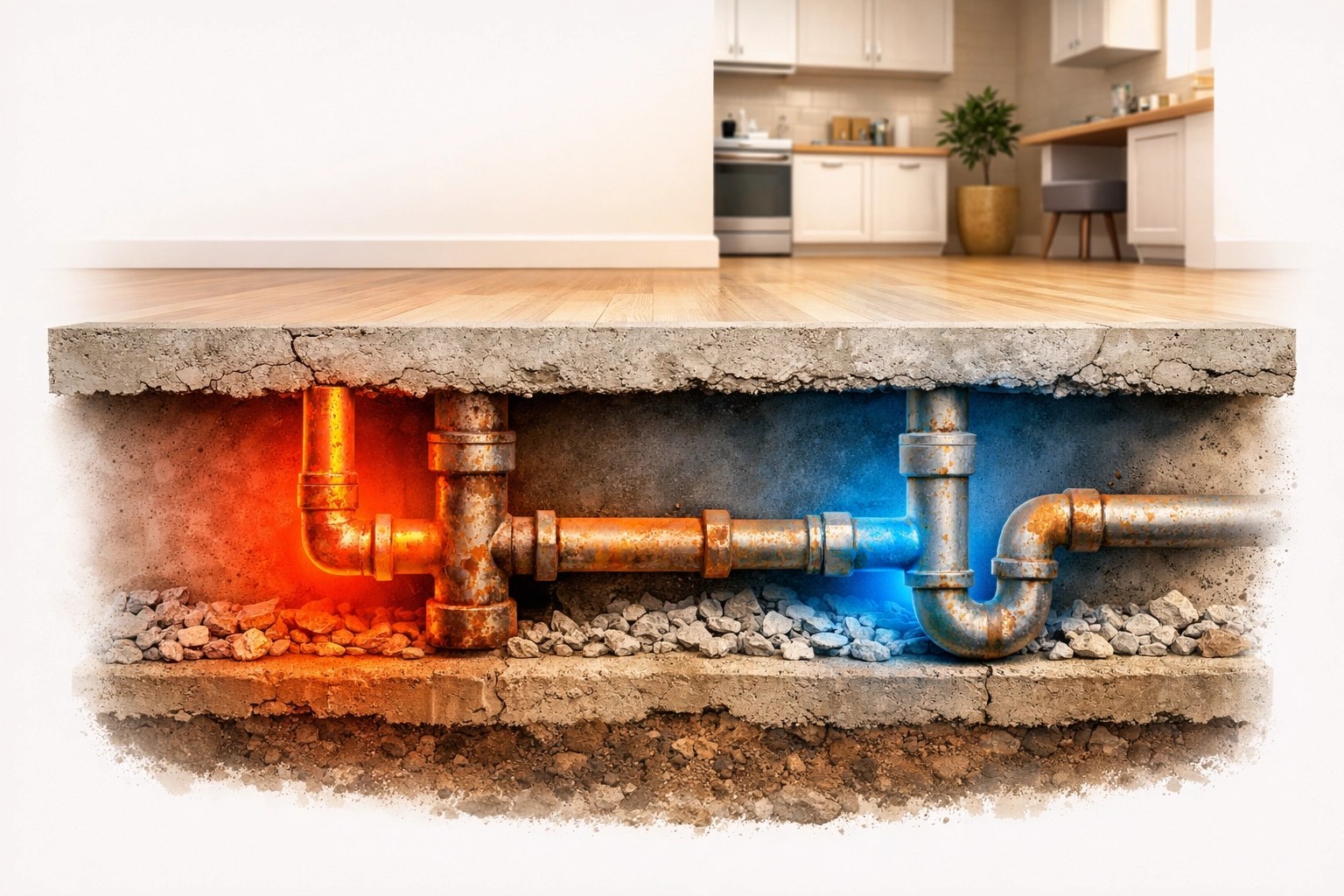
Water Pressure Issues: DFW homes often experience elevated water pressure from municipal systems. While high pressure might feel great in your shower, it's putting extra stress on your plumbing system and accelerating wear and tear on pipes and joints.
Hard Water: Our regional water quality includes high mineral content. Over time, this hard water causes buildup inside pipes, leading to corrosion and eventual leaks.
Foundation Movement: Even small shifts in your foundation: caused by that problematic clay soil: can cause pipes to disconnect, crack, or break. Your home settling isn't always a gentle, uniform process.
Warning Signs You Shouldn't Ignore
Early detection is your best defense against expensive repairs. Here are the red flags that should prompt immediate investigation:
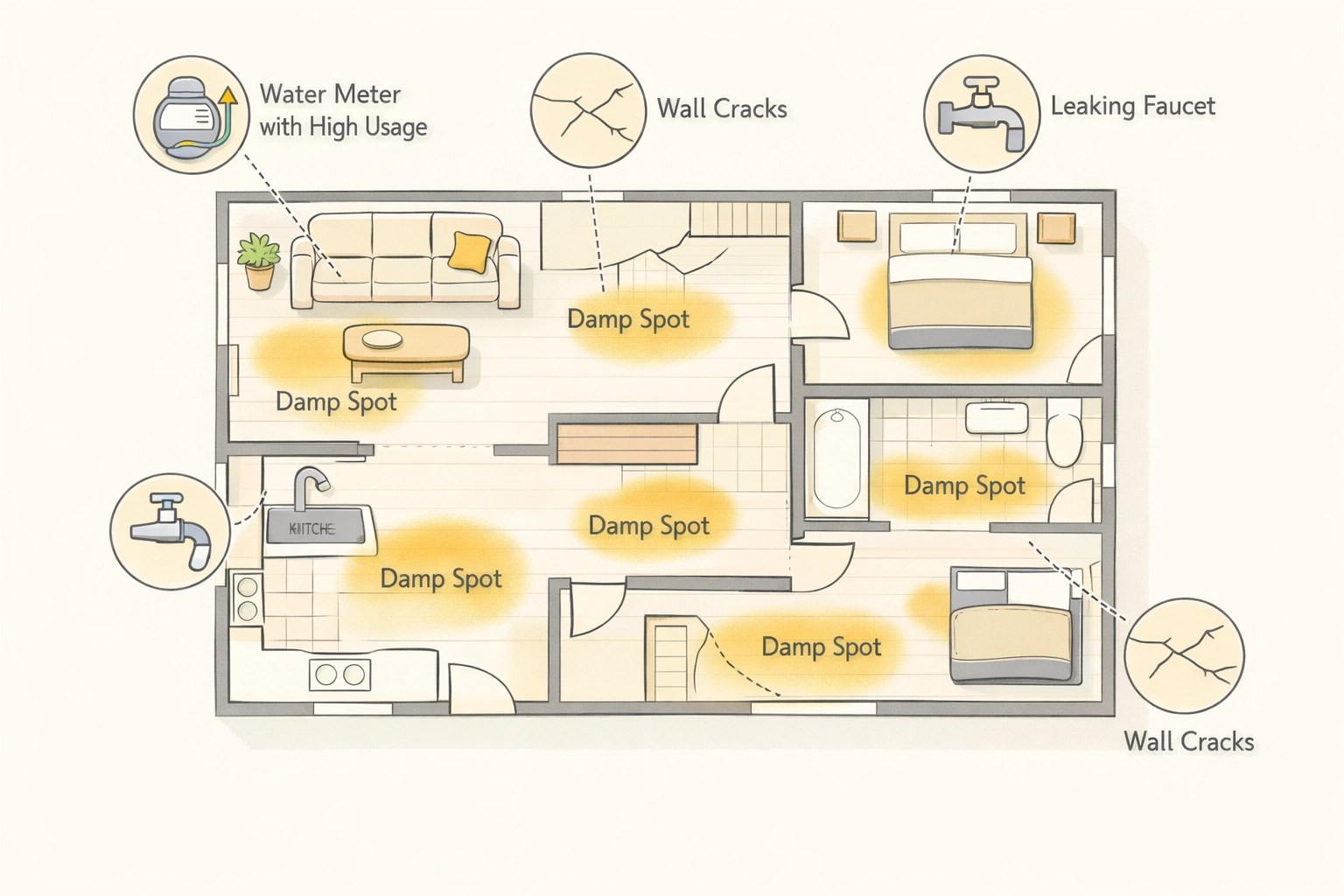
Your water bill suddenly spikes without explanation. A hidden leak can waste thousands of gallons before you notice.
Warm or damp spots on your floors, especially on tile or concrete. If an area of your floor feels warmer than surrounding areas, it could be hot water leaking beneath.
Low water pressure throughout your home. While pressure can drop for various reasons, persistent low pressure could indicate a slab leak diverting water.
The sound of running water when all fixtures are off. If you hear water moving through pipes when nothing's being used, that water is going somewhere it shouldn't.
Visible cracks appearing in walls, floors, or ceilings. Foundation shifts from water damage often show up as structural cracks.
Musty odors or moisture under carpets. If your nose detects that damp, moldy smell, trust it.
Cracks in your foundation or exterior walls. These could indicate soil erosion from leaking water undermining your foundation.
Protecting Your Investment: Prevention Strategies
You can't control the soil underneath your home, but you can take proactive steps to reduce your risk:
Install a pressure regulator if you don't already have one. Keeping water pressure at safe levels (around 60-80 PSI) reduces stress on your entire plumbing system.
Schedule annual professional inspections. A trained eye can spot potential problems before they become expensive emergencies. At Flash Property Services, we help property owners stay ahead of these issues.
Maintain consistent foundation moisture. During dry spells, water the soil around your foundation lightly and regularly. The goal isn't to saturate but to prevent extreme swings between bone-dry and soaked conditions. This helps minimize the expansion-contraction cycle.
Consider upgrading aging pipes. If your home predates the 1990s and still has original plumbing, proactive replacement with modern materials like PEX or CPVC could save you from emergency repairs down the road.
Keep gutters clean and drainage systems functional. Proper water management around your home prevents soil saturation and keeps moisture away from your foundation.
Disconnect exterior hoses in winter. Outdoor faucets are a major source of freeze-related leaks. This simple step takes two minutes and could save you thousands.
Monitor your plumbing monthly. Walk through your property regularly, checking for signs of moisture, listening for unusual sounds, and keeping an eye on your water bill.
What to Do If You Suspect a Leak
If you notice any warning signs, don't wait. Contact a professional immediately. Time is literally money when it comes to slab leaks: every day a leak goes unrepaired causes more foundation damage and wastes more water.
Here's something important to know: many professionals now recommend rerouting water lines rather than attempting under-slab repairs. This approach runs new pipes through alternative paths (like through walls or attic spaces), eliminating the need to break up your concrete foundation and avoiding future slab leak risks in that section of plumbing.
This strategy not only addresses the immediate problem but also protects you from repeat failures in the same area. It's often faster, less invasive, and more reliable than traditional under-slab repairs.
The Bottom Line
Living in the DFW area means dealing with challenging soil conditions that put your property at higher risk for slab leaks. But armed with the right knowledge and taking proactive steps, you can protect your investment and catch problems early when they're still manageable.
Your home is likely your largest financial asset. Don't let a hidden slab leak slowly chip away at its value. Stay vigilant, maintain your plumbing system, and don't hesitate to call in professionals when something seems off.
If you need help with property maintenance or suspect you might have a slab leak, our team at Flash Property Services is here to help. We understand the unique challenges of maintaining properties in North Texas, and we're committed to protecting your investment.
Remember: in the battle against slab leaks, knowledge and prevention are your best weapons. Now you're equipped with both.
Leave a Reply