
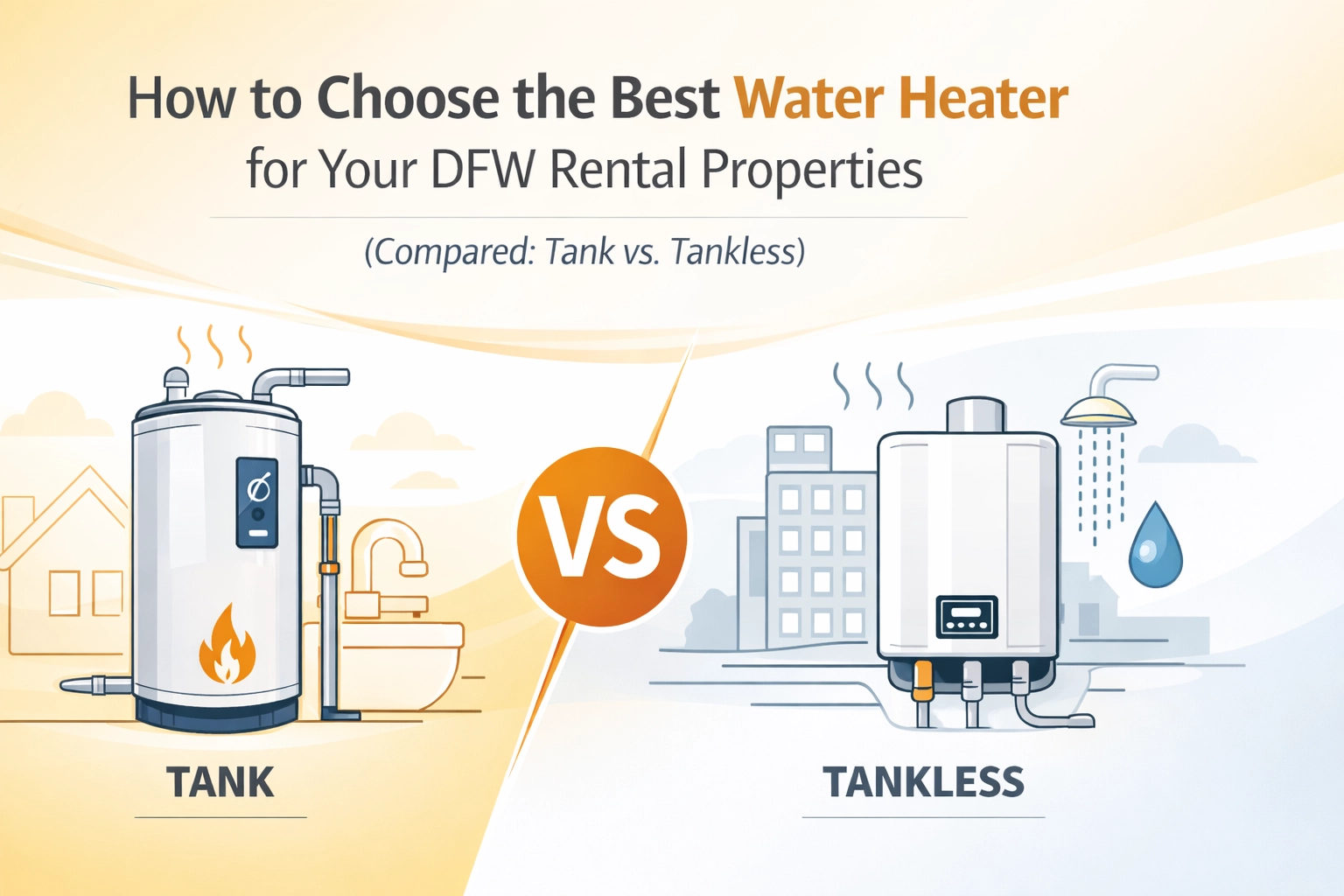
As a property owner in the Dallas-Fort Worth area, choosing the right water heater for your rental units isn't just about keeping tenants happy, it's a decision that impacts your bottom line for years to come. Whether you're replacing an old unit or outfitting a new property, the tank versus tankless debate is one you can't ignore.
Let's break down everything you need to know to make the smartest choice for your rental properties.
Understanding the Basics: Tank vs. Tankless
Traditional Tank Water Heaters work exactly like they sound, they store 30 to 80 gallons of water in an insulated tank and keep it hot 24/7. When your tenant turns on the shower, hot water flows immediately from this reserve. Simple, reliable, and the standard for decades.
Tankless Water Heaters (also called on-demand or instantaneous heaters) skip the storage tank entirely. Cold water runs through the unit, gets heated by gas burners or electric coils, and delivers hot water only when needed. No storage, no standby heat loss.

Both systems get the job done, but they do it in fundamentally different ways, and those differences matter a lot when you're managing rental properties.
Performance: How They Handle Real-World Demand
Here's where tenant expectations meet reality.
A traditional tank heater can handle multiple simultaneous demands, your tenant can run the dishwasher while someone showers without issue. The catch? Once you drain that 40 or 50-gallon tank, everyone's waiting 30-60 minutes for recovery. If you've got a family of five in your rental, that second morning shower might run cold.
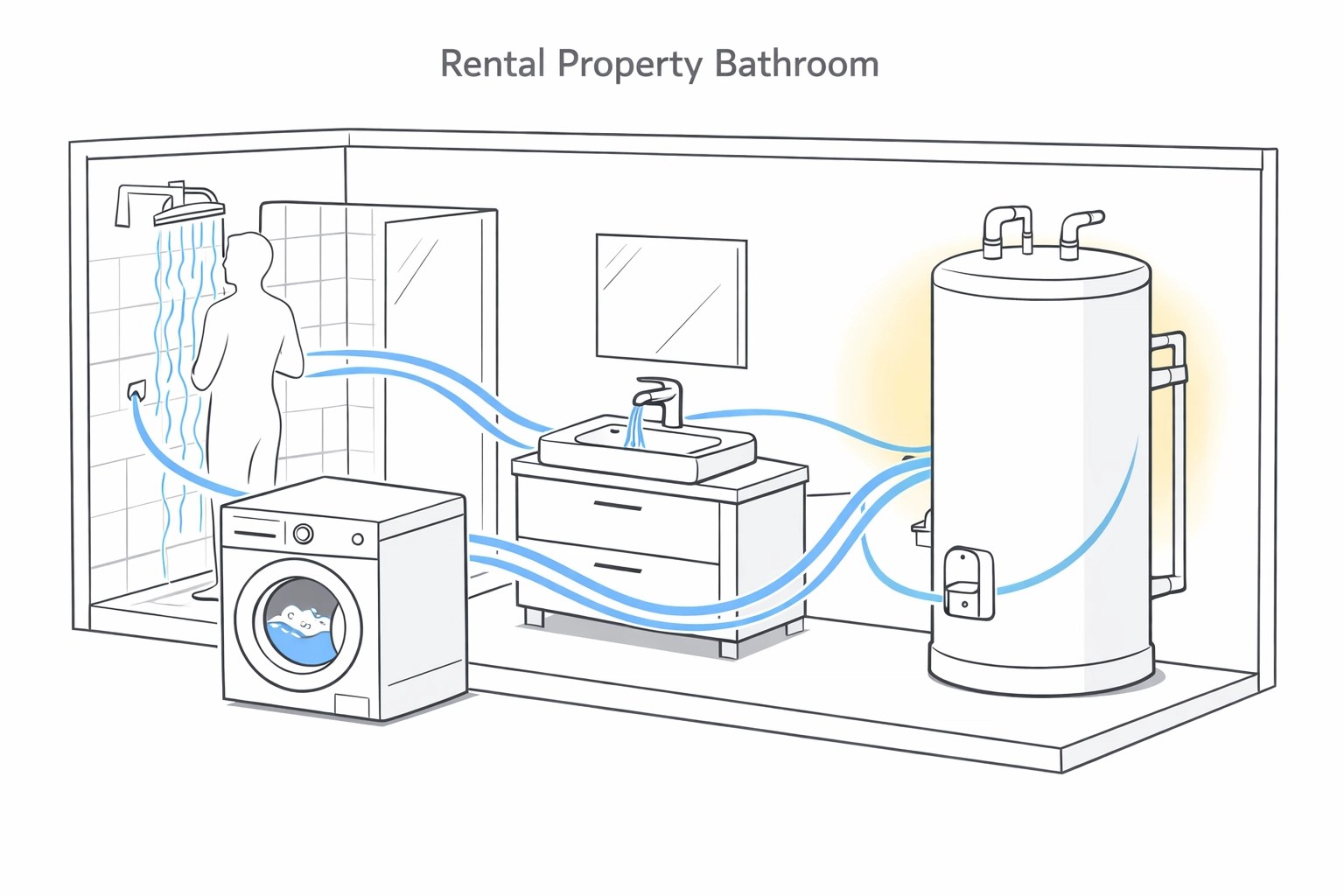
Tankless heaters never run out of hot water. They'll keep heating as long as the tap's running. But here's the rub: they have flow rate limitations. A single tankless unit typically handles 2-5 gallons per minute, depending on the model and your incoming water temperature. In DFW, where groundwater temperatures average around 65°F in winter, a mid-range tankless unit can comfortably supply one shower and one sink simultaneously. But try running two showers, a dishwasher, and a washing machine at once? Water pressure drops, and the temperature becomes inconsistent.
For your three-bedroom rental with two bathrooms, this matters. A lot.
The Cost Reality: Beyond the Price Tag
Let's talk numbers, because this is where most landlords make their decision.
Upfront Investment:
- Traditional tank heater: $500-$1,200 (unit + installation)
- Tankless heater: $1,500-$4,500 (unit + installation)
That installation cost difference isn't trivial. Tankless systems often require electrical upgrades, gas line modifications, or venting changes that can push installation costs to $1,150-$1,250 or higher. Tank heaters usually swap right into existing setups.
Operating Costs:
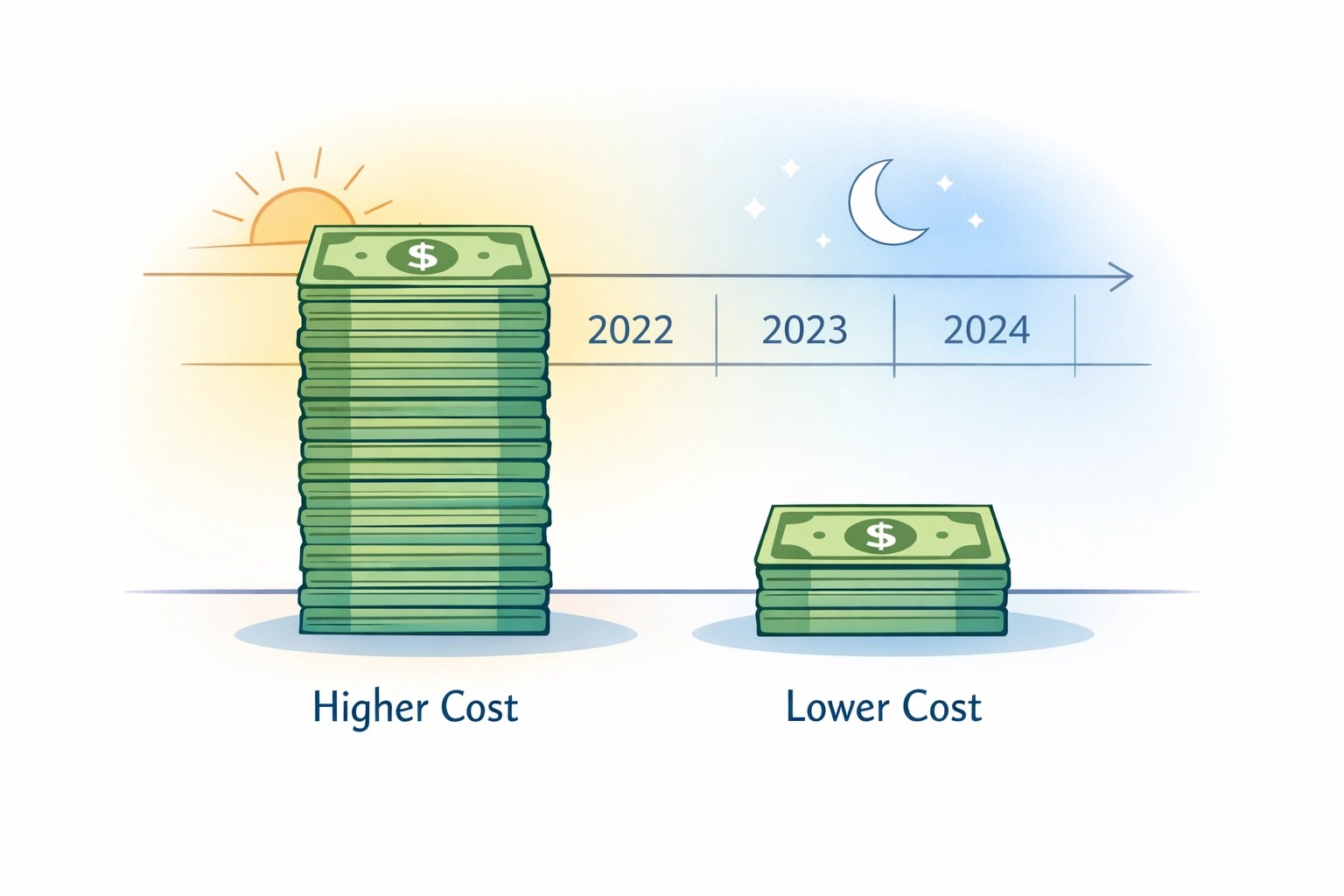
This is where tankless advocates make their case. According to Department of Energy data, tankless heaters deliver 24-34% energy savings for properties using 41 gallons or less daily. That's perfect for single-person or couple rentals. But at typical family usage levels (around 86 gallons daily), those savings drop to just 8-14%.
Here's what that looks like annually:
- Gas tankless: ~$195/year
- Electric tankless: ~$535/year
- Traditional tank: Higher by roughly $50-$150/year depending on efficiency
Lifespan:
Tank heaters last 6-10 years. Tankless units can push 20+ years with proper maintenance. Over two decades, that longevity advantage matters, but you need to own the property long enough to realize it.
The payback period for tankless? Between 12 and 27.5 years depending on fuel type and usage patterns. If you're flipping properties every 5-7 years, you'll never recoup that initial investment premium.
Space Matters in DFW Rental Markets
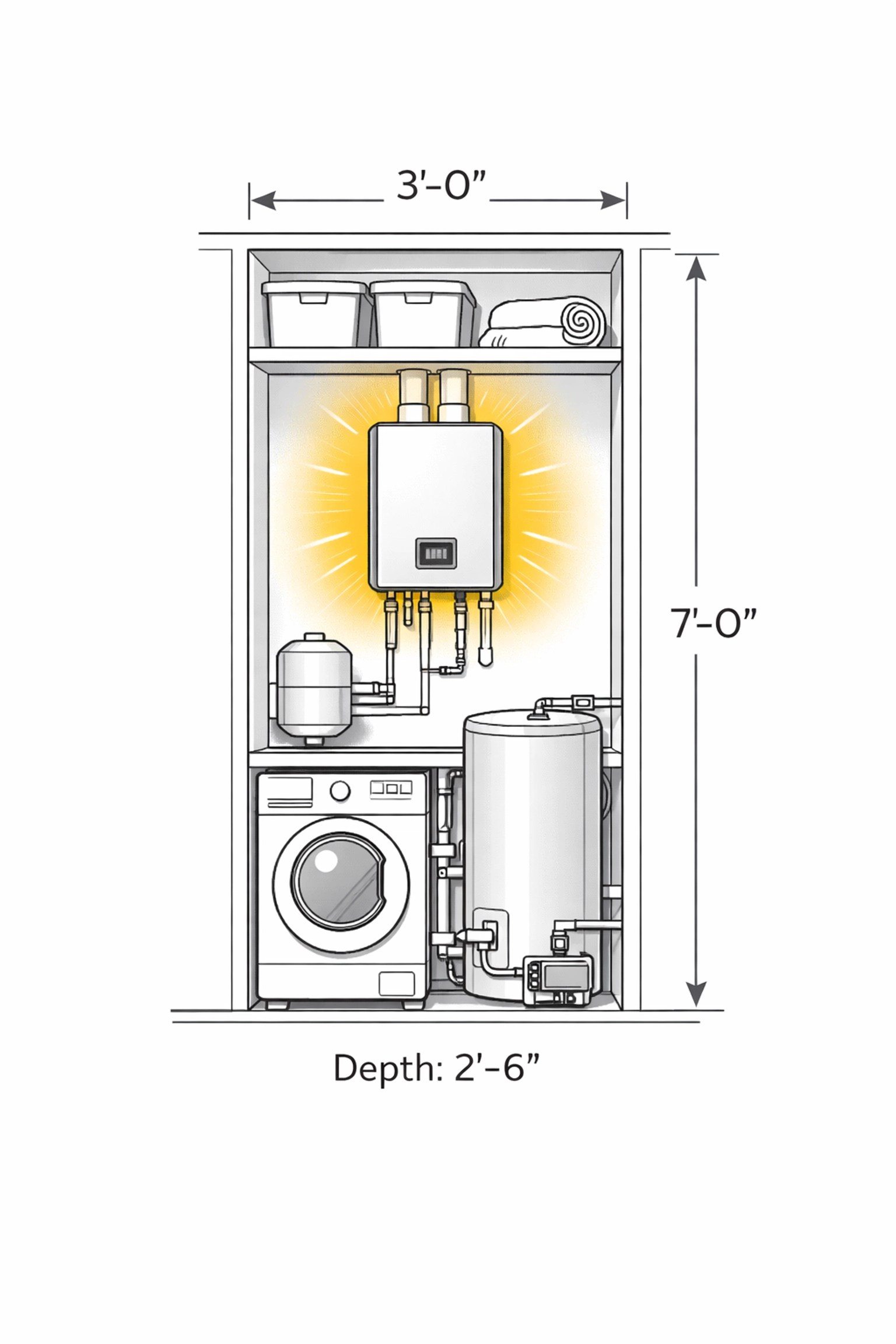
If you're managing properties in older Dallas neighborhoods or urban areas near downtown Fort Worth, space is at a premium. Traditional tank heaters need a footprint of roughly 16-24 inches in diameter and stand 5-6 feet tall. That's a significant chunk of your utility closet or garage.
Tankless units? They're about the size of a carry-on suitcase and mount right on the wall. Some property owners install them in attics, on exterior walls, or in cramped mechanical closets where a tank would never fit.
For multi-unit properties or converted duplexes where every square foot counts, this space savings can be a legitimate game-changer.
DFW-Specific Considerations
Our North Texas climate throws a few curveballs into this decision.
Hard Water: DFW has notoriously hard water. Both tank and tankless heaters suffer from mineral buildup, but tankless units are particularly sensitive. They require annual maintenance, flushing and descaling, which adds to your operating costs. Skip it, and you're looking at premature failure.
Winter Performance: While our winters are mild, we do see occasional freezes. Tankless units installed in garages or exterior walls need proper freeze protection. Tank heaters, with their stored reserve of hot water, provide a small buffer during power outages that some tenants appreciate.
Tenant Expectations: DFW renters generally expect reliable, abundant hot water. Properties with tankless systems need clear tenant communication about usage patterns, especially in larger homes where simultaneous use could cause issues.
Making the Right Choice for Your Property Type
Choose Traditional Tank Heaters For:
- Properties with 3+ bedrooms and multiple bathrooms
- Family-focused rentals where simultaneous hot water use is common
- Investments where you need to minimize upfront capital
- Properties you plan to turn over within 5-10 years
- Budget-conscious tenants prioritizing affordability over efficiency
Choose Tankless Heaters For:
- Single-family homes with 1-2 bedrooms
- Properties targeting young professionals or small families
- Tight spaces where square footage is valuable
- Green-conscious marketing (attracts eco-minded tenants who'll pay premium rents)
- Long-term holds where you'll capture the full lifecycle value
Important Warning: If you do go tankless in a larger property, seriously consider installing multiple units, one for each zone of the house. Yes, it increases costs, but it prevents the performance issues that lead to tenant complaints and negative reviews.
Maintenance Realities
Let's be honest about upkeep, because this affects your time and budget.
Tank heaters need occasional anode rod replacement and annual tank flushing (though many landlords skip the latter until there's a problem). When they fail, they often leak: potentially causing water damage. But repairs are straightforward, and every plumber in DFW can service them.
Tankless heaters require that annual descaling we mentioned: non-negotiable in our hard water area. The good news? They rarely catastrophically fail. The bad news? When they do need repairs, you're dealing with circuit boards and sensors. Specialist service costs more, and parts can take days to arrive.
Factor this into your property management approach. Do you have reliable relationships with service professionals who can handle both types?
The Verdict for DFW Landlords
There's no universal "best" choice: but here's the framework that works for most DFW rental property owners:
Start with your property profile. Small units with predictable, low usage? Tankless makes sense despite higher upfront costs. Large family homes with multiple bathrooms? Tank heaters deliver the performance your tenants expect without breaking your budget.
Consider your investment timeline. Holding for 15+ years? Tankless could pay off. Planning to sell or refinance within a decade? Tank heaters offer better short-term ROI.
Think about your management style. If you're hands-on with maintenance and have quality service relationships, tankless systems work fine. If you prefer "install and forget," tanks are more forgiving.
The Dallas-Fort Worth rental market is competitive enough without water heater headaches causing tenant turnover. Choose the system that matches your property's demands, your budget realities, and your management capacity.
Need help evaluating your specific properties or coordinating water heater installation? Reach out to our team: we work with property owners throughout DFW to make smart, cost-effective decisions on exactly these kinds of maintenance upgrades.
Because the best water heater isn't the one with the flashiest features: it's the one that keeps your tenants happy and your cash flow healthy.
Leave a Reply